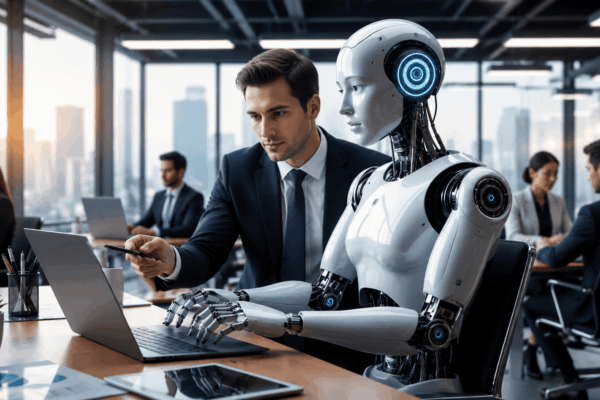
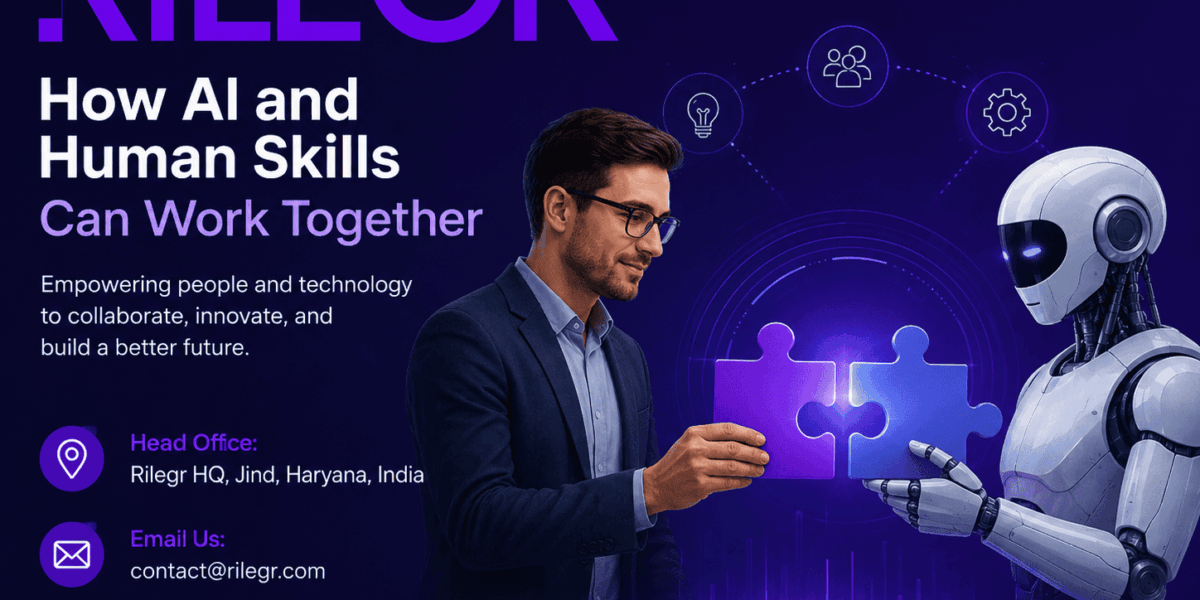
Artificial Intelligence (AI) is transforming the way businesses operate across the world. From automating routine tasks to analyzing large amounts of data in seconds, AI has become an essential tool for organizations seeking efficiency and growth. However, despite its impressive capabilities, AI is not a replacement for human intelligence. Instead, the most successful businesses are discovering that AI and human skills work best when combined.
Rilegr
Rilegr is a forward-thinking digital transformation and technology solutions company dedicated to helping businesses embrace innovation and achieve sustainable growth through advanced digital strategies, AI solutions, and business transformation services.
Head Office:
Rilegr HQ, Jind, Haryana, India
Email Us:
contact@rilegr.com
Website:
www.rilegr.com
The future of work is not about humans versus machines—it is about humans and machines working together. Organizations that successfully integrate AI with human expertise can improve productivity, innovation, customer experience, and decision-making. Studies from leading organizations such as IBM, McKinsey, and the World Economic Forum emphasize that AI delivers the greatest value when it complements human creativity, judgment, empathy, and problem-solving abilities.
Understanding the Strengths of AI
AI excels at handling tasks that require speed, consistency, and large-scale data processing. Modern AI systems can:
- Analyze massive datasets quickly
- Identify patterns and trends
- Automate repetitive tasks
- Generate reports and summaries
- Provide predictive insights
- Improve operational efficiency
Businesses use AI in customer service, marketing, finance, healthcare, manufacturing, and software development to reduce manual workloads and increase productivity. AI can perform repetitive processes around the clock without fatigue, making it an excellent tool for improving efficiency.
However, AI has limitations. It lacks emotional intelligence, ethical judgment, creativity, and the ability to fully understand human experiences. This is where human skills become indispensable.
The Unique Value of Human Skills
Humans possess qualities that technology cannot easily replicate. These include:
Creativity
While AI can generate ideas based on existing data, humans create original concepts, innovative solutions, and visionary strategies. Creativity remains a major driver of business growth and competitive advantage.
Emotional Intelligence
People understand emotions, build relationships, and communicate with empathy. These abilities are essential in leadership, customer service, team management, and negotiations.
Critical Thinking
Humans can evaluate complex situations, consider multiple perspectives, and make informed decisions. AI may provide recommendations, but human judgment determines the best course of action.
Ethical Decision-Making
Business decisions often involve ethical considerations that require human values and accountability. Humans remain responsible for ensuring AI is used fairly and responsibly.
Adaptability
People can navigate uncertainty, learn from experience, and respond to unexpected challenges. Human adaptability remains a critical asset in rapidly changing business environments.
Research consistently highlights that communication, empathy, leadership, adaptability, and critical thinking are becoming even more valuable as AI adoption increases.
Why AI and Humans Are Better Together
The greatest benefits emerge when AI and humans collaborate. AI handles data-intensive and repetitive work, while humans focus on strategy, creativity, and relationship-building.
Enhanced Productivity
AI can automate routine administrative tasks, allowing employees to focus on higher-value activities. For example, AI can process reports and analyze data, while employees use those insights to develop business strategies.
Organizations that effectively combine AI tools with human expertise often experience significant productivity improvements.
Better Decision-Making
AI provides data-driven insights, but humans provide context and judgment. Together, they create smarter and more balanced decisions.
For example, an AI system may identify customer purchasing trends, but marketing professionals determine how to use that information to create meaningful campaigns.
Accelerated Innovation
AI can rapidly generate ideas, simulations, and prototypes. Human teams can then refine those outputs, ensuring they align with business goals and customer needs.
This partnership speeds up innovation while maintaining quality and creativity.
Improved Customer Experiences
AI-powered chatbots can answer common questions instantly, while human representatives handle complex or emotionally sensitive situations.
This combination provides both efficiency and personalization, creating better customer satisfaction. Organizations with mature AI adoption often report improved customer experiences when human support remains integrated into the process.
Real-World Examples of Human-AI Collaboration
Marketing
AI analyzes customer behavior, predicts trends, and automates campaigns. Marketing professionals use these insights to create engaging content and strategic campaigns that connect with audiences.
Healthcare
AI assists doctors by analyzing medical images and patient data. Healthcare professionals then use their expertise and empathy to diagnose conditions and provide patient care.
Human Resources
AI can screen resumes and identify qualified candidates. HR professionals conduct interviews, assess cultural fit, and make final hiring decisions.
Software Development
AI-powered coding assistants help developers write code faster. Developers still provide architectural planning, creative problem-solving, and quality assurance.
Finance
AI identifies financial trends and potential risks. Financial experts interpret the results and make strategic investment decisions.
Building a Successful Human-AI Workforce
Organizations seeking to maximize AI benefits should focus on several key areas.
Invest in Employee Training
Employees need AI literacy to work effectively with emerging technologies. Training programs should teach workers how to use AI tools while strengthening uniquely human skills.
Encourage Collaboration
Rather than viewing AI as a replacement for employees, businesses should position it as a supportive partner that enhances human performance.
Strengthen Human Skills
Communication, leadership, creativity, and critical thinking should remain priorities in workforce development programs.
Establish Ethical Guidelines
Organizations must ensure transparency, accountability, and fairness in AI deployment. Human oversight is essential for maintaining trust and responsible decision-making.
Promote Continuous Learning
As technology evolves, employees must continuously update their skills. Lifelong learning helps organizations remain competitive and adaptable. The World Economic Forum notes that preparing workers for AI-enhanced environments requires ongoing skill development and clear role definitions between humans and AI systems.
Challenges to Address
Despite its benefits, AI integration presents challenges:
- Overreliance on AI outputs
- Potential bias in AI systems
- Data privacy concerns
- Employee resistance to change
- Skill gaps within organizations
Experts warn that businesses should avoid depending entirely on AI without human verification and oversight. Human judgment remains essential for ensuring accuracy, quality, and accountability.
The Future of Human-AI Collaboration
The future workplace will increasingly rely on collaboration between people and intelligent systems. Rather than replacing workers, AI will augment human capabilities, allowing employees to focus on creativity, innovation, leadership, and relationship-building.
Companies that embrace this collaborative model will be better positioned to compete in the digital economy. Success will come not from choosing between AI and humans but from combining the strengths of both.
As AI continues to evolve, the organizations that thrive will be those that empower employees with technology while preserving the human qualities that drive innovation, trust, and meaningful connections.